
Production · 6 min read
How Custom Embroidered Patches Are Made
From your artwork to a finished patch: digitizing, stitching, borders, backing and quality checks.
By Markhor Patches Team · Reviewed by Markhor Patches Production Team · Published Oct 5, 2026 · Updated Nov 2, 2026
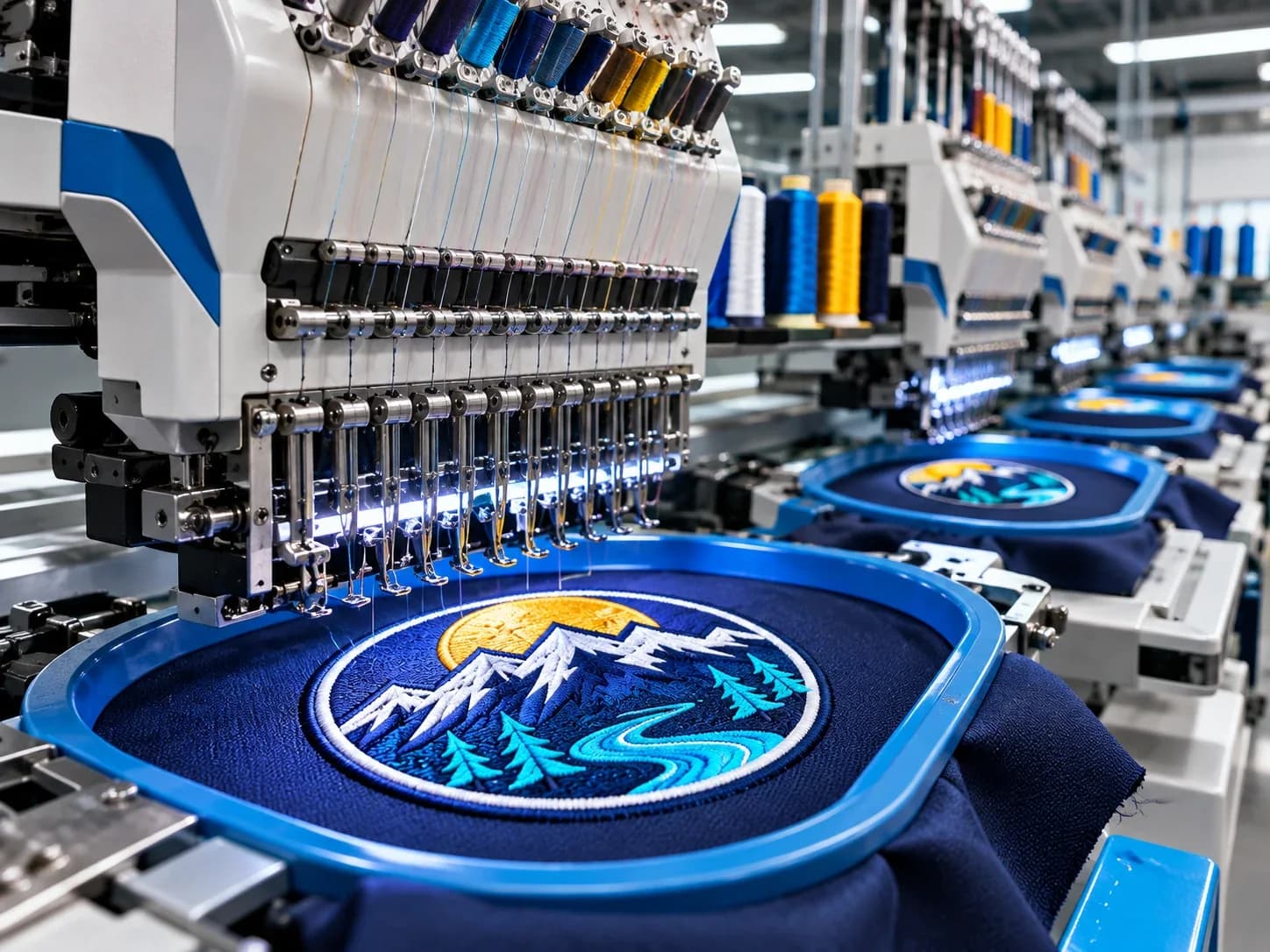
A good embroidered patch is the result of many small decisions most people never see.
1. Artwork review
We start with your artwork and requirements: size, colors, quantity and where the patch will be used.
2. Digitizing
Your design is converted into a stitch file. This is where stitch direction, stitch density and stitch types are chosen. Good digitizing is the difference between crisp edges and a muddy result.
3. Digital proof
You receive a proof showing the artwork, size, thread colors and specifications. Nothing is produced until you approve it.
4. Stitching
The approved file runs on industrial embroidery machines, stitching the design onto a twill base, color by color.
5. Borders
Simple shapes typically get a merrowed (overlocked) edge; custom outlines are heat-cut or laser-cut.
6. Backing
Iron-on, sew-on, hook & loop or adhesive backing is applied.
7. Quality check and packing
Finished patches are checked against the approved proof, then counted and packed for tracked shipping.
You can follow each of these stages in your account once your order is confirmed. See our facility.
FAQ
Related products
Ready to start your patch?
Send your requirements and artwork — we'll reply with a private quote and a digital proof.
Related guides
What Makes a High-Quality Embroidered Patch?
Stitch density, thread direction, clean borders, color accuracy and finishing — what to look for.
How Long Do Custom Patches Take?
What affects your timeline — proofing, patch type, quantity, rush and shipping — and how to plan.
What Determines Custom Patch Pricing?
The factors that shape a patch quote — size, quantity, type, colors, backing and timeline.

Your design. Our craft.
Tell us what you're making and our team will help take it from artwork to finished patch.